Strategy
Two types:
- Cheaper: commodities (fungible, indistinguishable)
- Different: every other product and service
Strategy: A continuous, emergent process that enforces the decisions required to at all times keep “vision“, “plan“ and “doing“ coherent.
Disruption
Not: Great Big Innovation that changes everything
Disruption is a Process: It is not a single product or service, but an evolving business model that targets overlooked customers
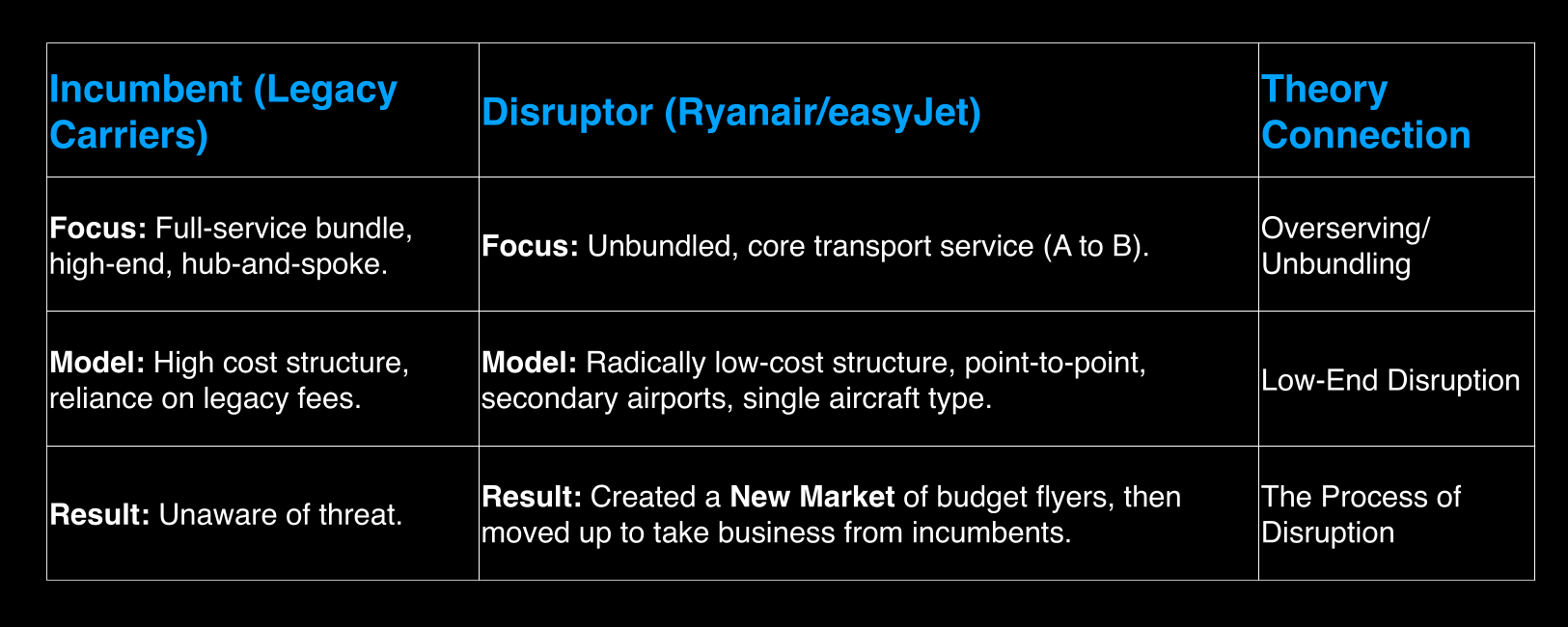
- Incumbent’s Dilemma: Established firms rationally focus resources on sustaining innovations, which leads them to overserve the low-end market
- The Opportunity: This overserving creates a low-end gap that the disruptor can enter and exploit
Entry Point:
- Low-End Disruption: Targets are overserved, low-margin customers
- New-Market Disruption: Targets are non-consumers (people for whom the existing product was too complex or expensive)
Timeline:
- The disruptor’s product is initially judged as inferior by mainstream customers on traditional performance metrics. That’s why it is overlooked, not taken as a threat, is laughed upon
- The disruptor rapidly improves its product’s performance over time, eventually becoming “good enough” for the mainstream market, which then rapidly switches, often due to lower cost or higher convenience
- Business Model: Success relies on a fundamentally simpler and lower-cost business model that is profitable at price points the incumbent cannot match
Bundling / Unbundling:
- The incumbent grew by adding more and more functionality and layers to its offering. And finally protecting that. This means it bundles ever more into its offering. Think Telco, Amazon Prime, Netflix
- Disruption often occurs through unbundling, where a new entrant focuses on a single, core function and strips away the expensive “bundle” of features and services offered by the incumbent
Frameworks
Playing To Win
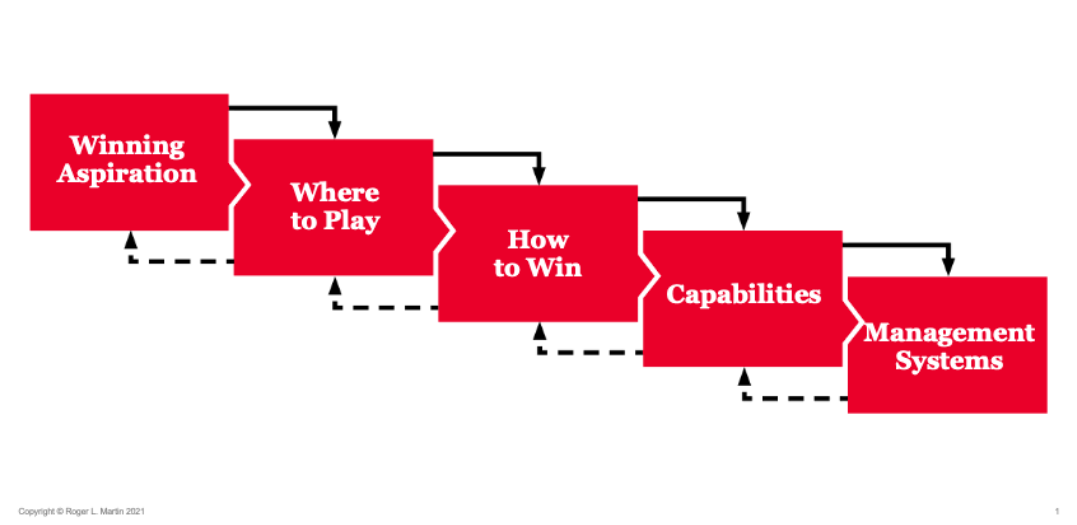
Grundannahme: Strategie ist kein allgemeiner Plan, sondern ein Entscheidungsfindungsprozess mit 5 aufeinander aufbauenden Entscheidungen:
- die eigene Ambition klären
- die Kategorie bzw. den Markt bestimmen, in dem man gewinnen will (where to play)
- ein erfolgsversprechendes Vorgehen zu bestimmen (how to win)
- sich für bestimmte Ressourcen zu entscheiden, die man hierfür nutzen oder erwerben will
- sich für ein bestimmten Managementsystem zu entscheiden, dass man aufbaut, um die notwendigen Aktivitäten zu steuern und zu kontrollieren
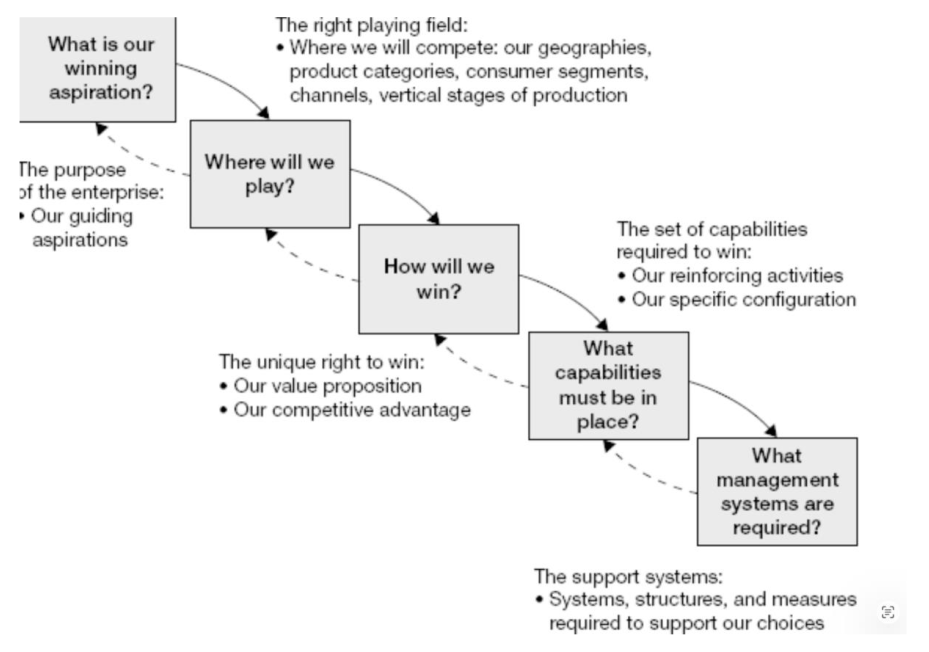
Assumption mapping and testing is integral part of strategy!