Control
Controller
device that monitors and changes the operating conditions of a given dynamical system
- historically analog
- nowadays they are digital (microprocessor / computer)
Microcontroller
a small computer on a single integrated circuit containing a processor core, memory, and programmable input/output peripherals.
- Program memory in the form of NOR flash or OTP ROM is also often included on chip, as well as a typically small amount of RAM.
- Microcontrollers are designed for embedded applications, in contrast to the microprocessors used in personal computers or other general purpose applications.
Control system
manages, commands, directs, or regulates the behaviour of other devices or systems using control loops
- open loop control: no sensor involved, controlled using only the model of the system (e.g. electrical characteristics) and the initial state (room temperature, …)
- closed loop control: adds negative feedback to adjust the system output at all times (sensor does not have to be electronical, can for example be mechanical)
Sensors
a device, module, or subsystem whose purpose is to detect events or changes in its environment and send the information to the control
- timer not a sensor in our case (same as adding a Stromzähler, does not close the feedback loop, still predetermined control)
Magnetometer
instrument that measures magnetism—either magnetization of magnetic material like a ferromagnet, or the direction, strength, or the relative change of a magnetic field at a particular location.
Hall effect sensor
transducer that varies its output voltage in response to a magnetic field.
- Hall effect sensors are used for proximity switching, positioning, speed detection, and current sensing applications.
Encoder
Electro-mechanical device that converts the angular position or motion of a shaft or axle to an analog or digital code
- Magnetic encoder produces a voltage proportional to the orientation of a magnetic field
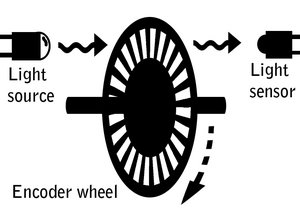
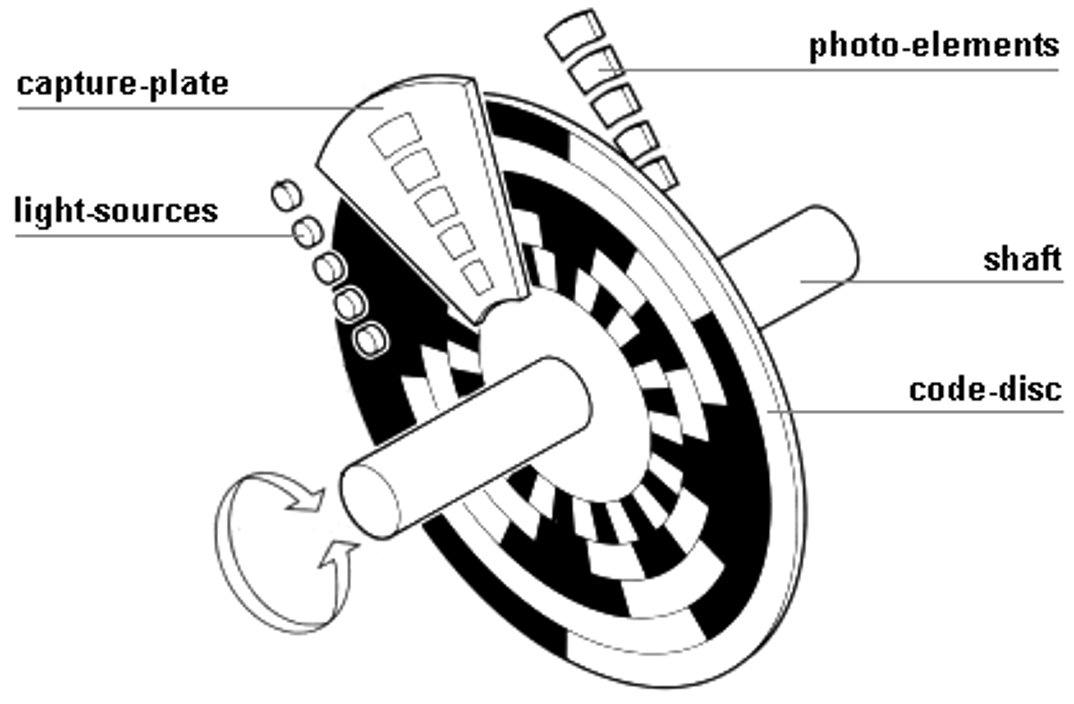
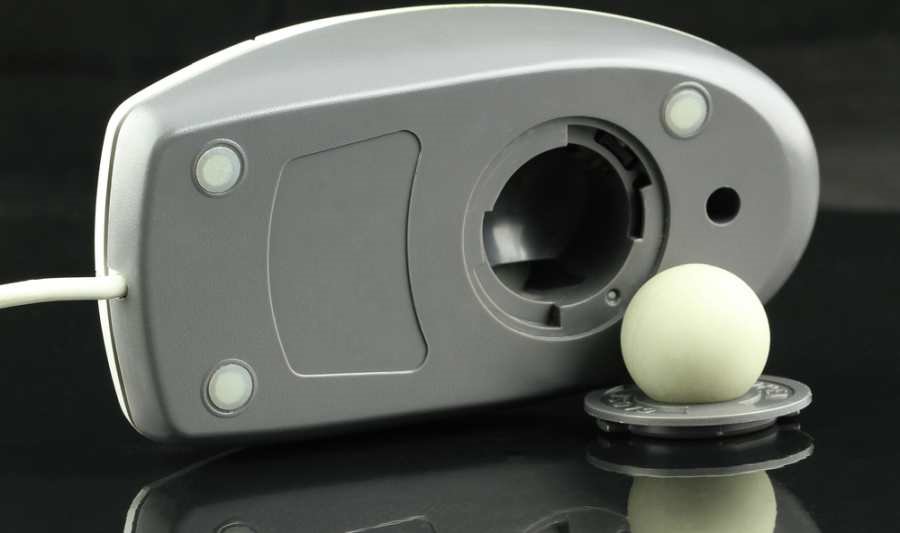
Motors
Electrical Motor
an electrical machine that converts electrical energy mechanical energy
- speed of a DC motor is not controlled by an H-bridge, but rather by the amount of voltage, typically controlled through PWM
Relay
an electrically operated switch
- handles high power required to directly control an electric motor or other loads
- can be used to change direction of a DC motor using an H-bridge:
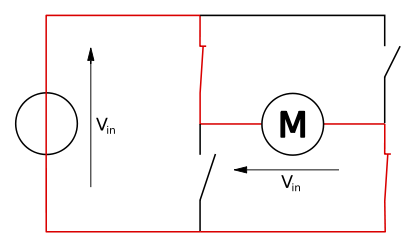
Motor driver
includes H-bridge and speed control
- IN1, IN2, ENA
- fast stop | slow stop
Example
Dimmer
- use resistor to dim a lamp?
- heating up the resistor high loss of energy
- instead use PWM (at least for LEDs)