Agile Scrum Basics
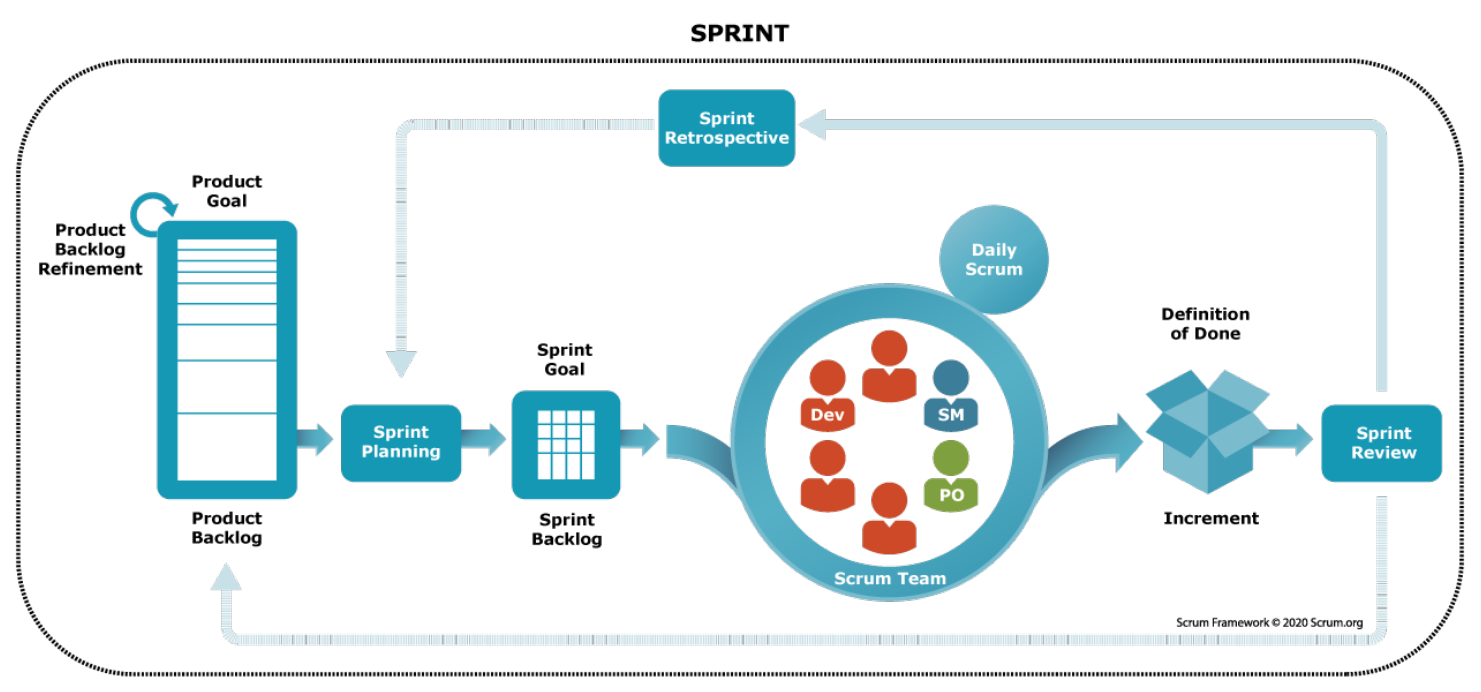
Sprint: container for all the work that is done by the team to achieve a Sprint Goal
- no work outside the Sprint | no gaps between Sprints
- starts with a Sprint Planning meeting
- lasts no longer than a month
- ends with two reviews: Sprint Review (work completed) & Sprint Retrospective (process)
Sprint Backlog: all the work to be done by the team over one or more Sprint Goals
Sprint Planning: select product backlog items to be part of Sprint Goal | focus on value that can be created by the Sprint
- Sprint Goal: selection of items that were estimated and prioritized to be done
Sprint Review: working meeting where the Scrum Team presents their completed work to their stakeholders and asks for feedback and guidance
- used to discuss progress towards Product Goal, emerging changes in the business and technical landscape as well as future collaboration strategies
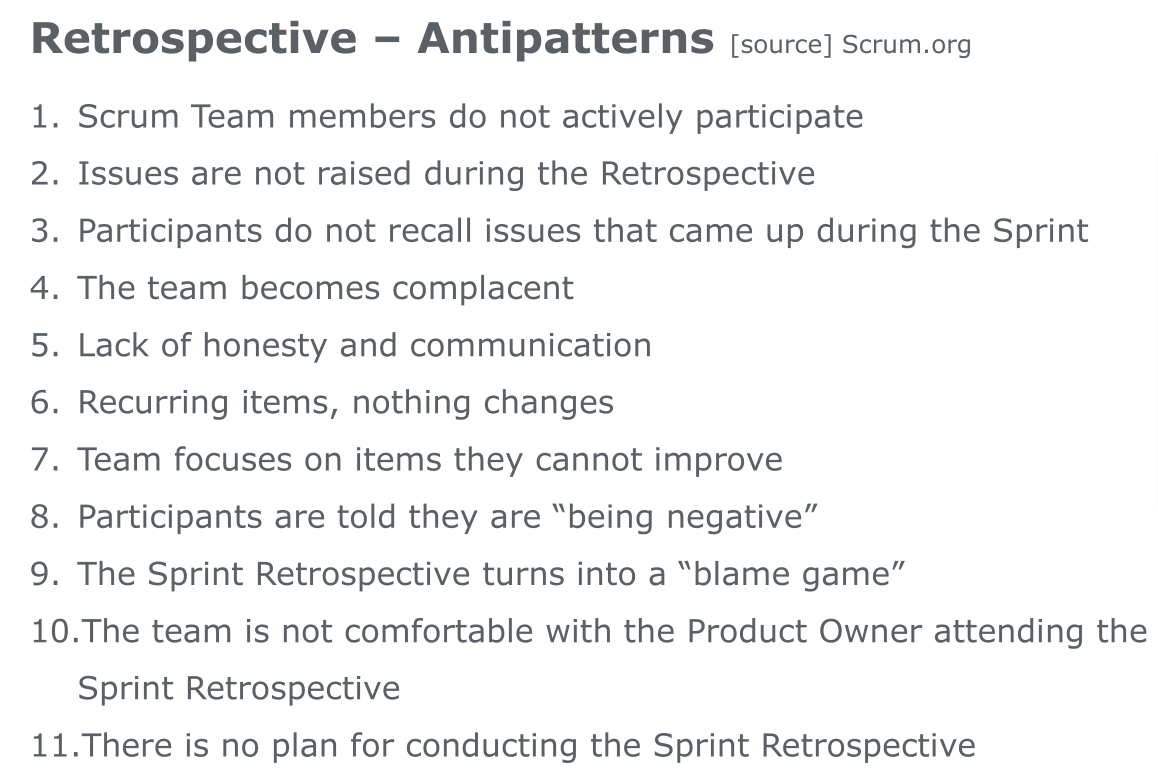
Retrospective:
- What went well in the Sprint? : collaboration, impediments and handling of them, Definition of Done still appropriate?
- What can be improved? : process & methods, tooling, communications, attitude (+ priority among those issues)
Lifecycle of Backlog Item
- Backlog: waiting to be estimated and prioritized
- Ready / To-Do: waiting to be added to a Sprint Goal
- In Progress: item is in the current Sprint Goal
- Review: implemented (and tested), waiting to be reviewed
- Done: finished by the team
Definitions
Definition of Ready: The team defines the criteria to decide if a User Story can be part of a Sprint
- e.g. dependencies accounted for, acceptance criteria defined, estimation finished, value and priority aligned on current Sprint Goal, design assets available, testing defined (manual / automated)
Definition of Done: The team must specify the criteria for deciding if a User Story is finished, hence it can be presented (demo) to the user during the Review Meeting
- e.g. fully reviewed, tested without errors, documentation updated, implementation compliant with standards
User Stories, Epic, Initiatives
User Story: short requirements or requests written from the perspective of an end user
Epic: large body of work that can be broken down into smaller items (called stories)
- Systemfunktionen
Initiative: collection of epics that drive toward a common goal
- größere geschäftliche und gesellschaftliche Ziele
Theme: strategische, übergeordnete Zielsetzung eines Unternehmens
- z.B. “in 10 Jahren CO2-neutral werden”
- zur Verwirklichung müssen mehrere Initiativen ins Leben gerufen werden
Theme > Initiative > Epic > User Story
User Stories
- Small piece of functionality
- Describe from the perspective of the user
- Deliver value to the user
As a [type of user], I want [goal] so that [reason].
- User role: this could be a specific type of user, like an “admin” or “customer,” or a more general role, like “end user”
- Goal: this should be a single, clear objective
- Reason: explain why the user wants to achieve this goal | provide context and justification for the feature
- Acceptance Criteria: set the expectations that have to be met for the user story to be closed | often written as a checklist of specific requirements
Benefits
- User centric: keeps the focus on the user’s needs
- Collaboration: Encourages teamwork and communication
- Flexibility: Easily adjustable as priorities change
- Clarity: Offers clear guidance on what needs to be built
Common Mistakes
- Vagueness: “As a user, I want a better dashboard”
- Too large: “As an admin, I want to manage users, roles, and permissions”
- Focusing on Solutions: “As a user, I want a drop-down menu to select my country”
Examples
- As an online shopper, I want to receive price alerts so that I can buy my favorite products a lower prices
- As a frequent traveler, I want to receive flight status updates so that I can plan my airport arrival accordingly
- As a customer, I want to receive an email confirmation so that I know my order has been processed

INVEST Principles
- Independent: They should stand alone and not depend on other stories
- Negotiable: They should be flexible and open to discussion
- Valuable: They should deliver value to the user
- Estimable: They should be easy to estimate in terms of time and effort
- Small: They should be small enough to complete within a single sprint
- Testable: They should have clear acceptance criteria
Agile
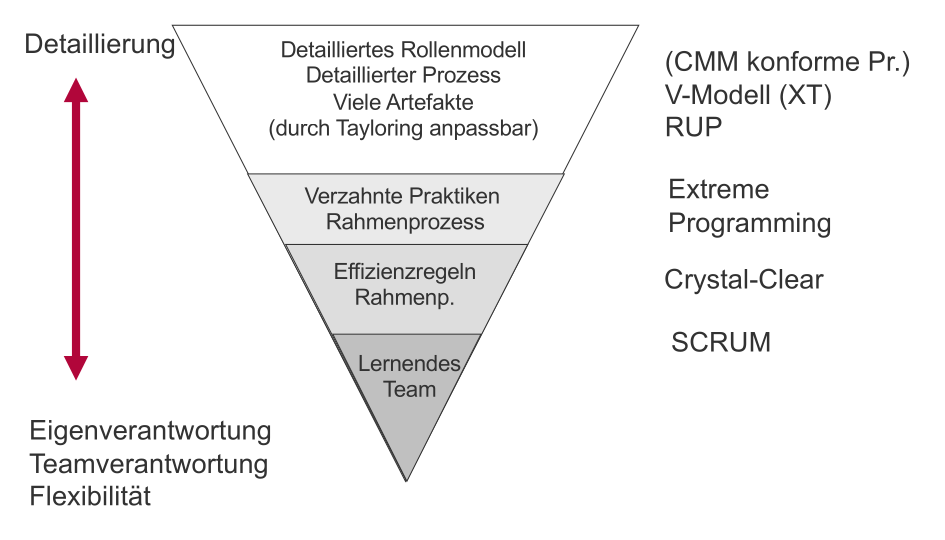
Ermöglicht bessere Abstimmung zwischen Werten Prinzipien Methoden Tools
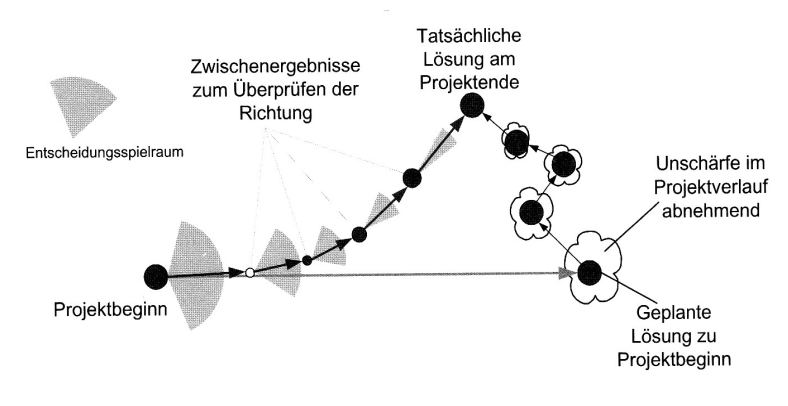
- Wohldefinierte Probleme: klare Ziele und Lösungswege Engineering als Optimierungsproblem
- Verzwickte Probleme (wicked problems): unklar definiert, Verständnis durch Lösungsentwicklung Engineering als iteratives Suchproblem
The Agile Manifest:
- Individuen und Interaktionen mehr als Prozesse und Werkzeuge
- Funktionierende Software mehr als umfassende Dokumentation
- Zusammenarbeit mit Kunden mehr als Vertragsverhandlung
- Reagieren auf Veränderung mehr als das Befolgen eines Plans

Scrum
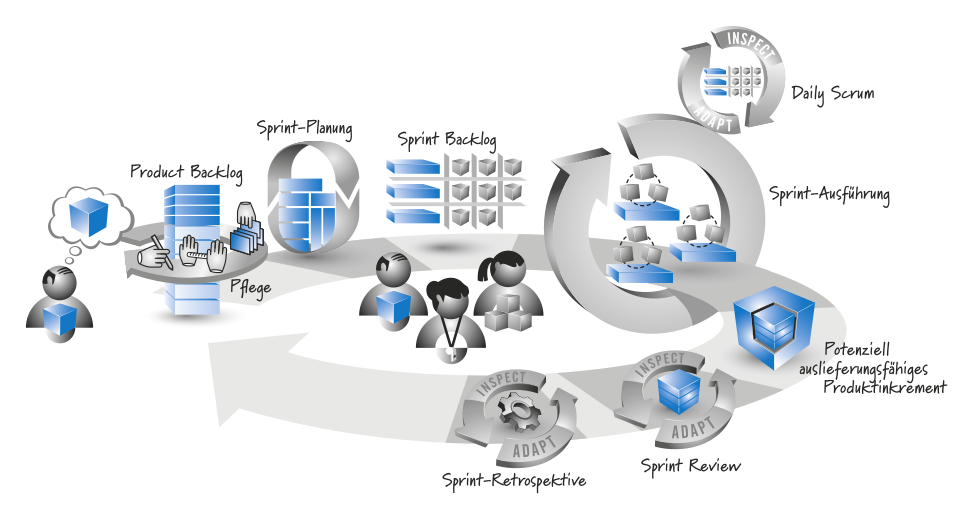
Sprints (Aktivität):
- Time-Boxen / Iterationen (feste Länge Kalendermonat)
- sollte etwas von greifbarem Wert schaffen
- normalerweise: während des Sprints keine Änderungen, die das Ziel gefährden
Rollen:
- Product Owner: was und in welcher Reihenfolge
- Scrum Master: Nutzung des Scrum-Frameworks anleiten
- Entwicklungsteam: verantwortlich das zu liefern, was der Product Owner haben möchte
Product Backlog (Artefakt):
- Elemente: erforderliche Funktionen / Eigenschaften, technische Verbesserungen, etc.
- Elemente werden durch Product Owner mit Stakeholdern gesammelt
- Arbeitsreihenfolge wird durch Product Owner bestimmt
- Pflege (Grooming | Aktivität): Anlegen und Verfeinern der Elemente, Priorisierung auf Basis der Kosten (z.B. Story-Punkte oder Idealtage)
Sprint-Planung (Aktivität):
- Planungstreffen mit Owner, Entwicklungsteam und Scrum Master
- Owner und Entwicklungsteam einigen sich auf Sprint Goal
- Entwicklungsteam ermittelt Elemente mit höherer Priorität, die realistisch im nächsten Sprint umgesetzt werden können
- ca. 2 Stunden Planung pro Sprint-Woche
Sprint Backlog (Artefakt):
- Aufteilen der angestrebten Funktionen in eine Reihe von Aufgaben (Just-in-time-Planung)
- Aufwandsschätzung der Aufgaben (typischerweise in Stunden)
Sprint-Ausführung (Aktivität):
- Entwicklungsteam führt unter Anleitung des Scrum Masters alle Aufgaben durch
- Reihenfolge und wie der Arbeiten selbstbestimmt
- Ziel ist das Erreichen des Done-Zustandes
- Fertig (Done | Artefakt): Aus Sicht des Scrum-Teams ein potenziell auslieferungsfähiges Produktinkrement (Definition variabel)
Daily Scrum (Aktivität):
- Tägliches zeitlich begrenztes Treffen (max. 15 Minuten)
- Was wurde geschafft? Woran wird nun gearbeitet? Welche Hindernisse gibt / gab es?
Sprint Review (Aktivität):
- Teilnehmer: Scrum Team, Stakeholder, Sponsoren, Kunden sowie aus anderen Teams
- Fokus: Überprüfen der gerade fertiggestellten Funktionen im Kontext, Beeinflussung der weiteren Entwicklung
- Scrum Team: entwickelt ein tieferes Verständnis für die Geschäfts- und Marketingseite ihres Produkts
Sprint Retrospektive (Aktivität):
- Teilnehmer: Scrum Team, Scrum Master und Product Owner
- Fokus: stetige Verbesserung des Prozesses
- Scrum Team: sollte konkrete Aktionen zur Prozessverbesserung für den nächsten Sprint identifiziert haben
Code Review
Methodology to inspect the source code for compliance and possible bugs
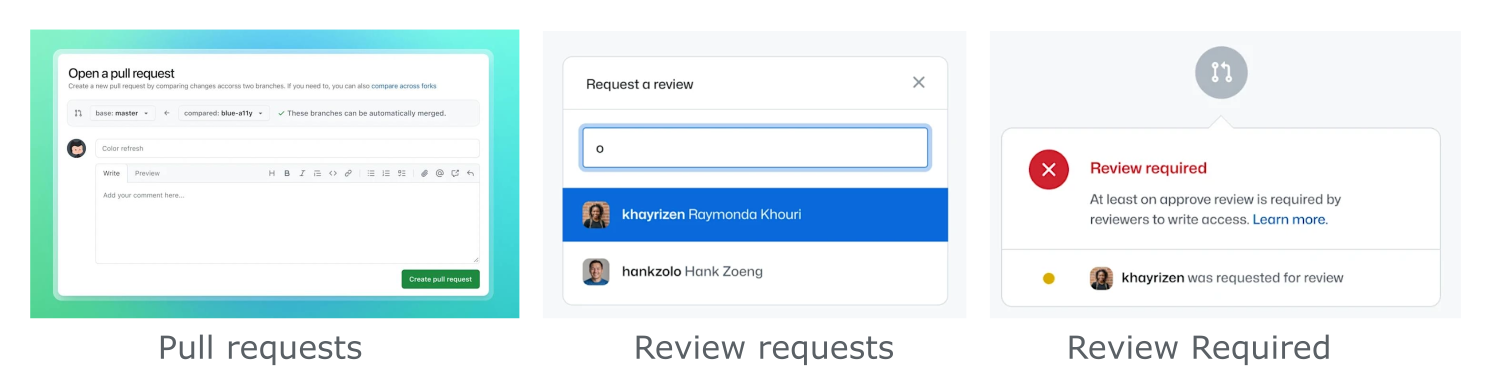
- Improves code quality, promotes code ownership of the team and can help onboard new members
- Best practices:
- create a checklist (e.g. readability, security, test coverage, architecture, reusability)
- code review metrics (e.g. inspection rate, defect rate, defect density)
- provide rich feedback: what, why, and how to change
Planung
Kanban Board
- visualize work (minimize work invisibility)
- limit work-in-progress
- maximize efficiency
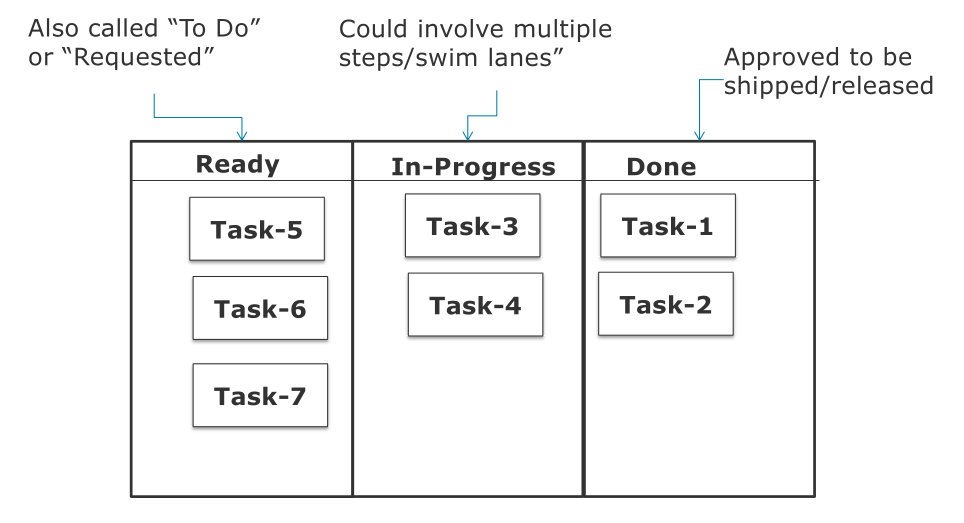
- Ready: understood by team | has business value | dependencies identified | is small | clear acceptance criteria
- Done: built without errors | acceptance criteria are met | demonstrated to stakeholders | approved by Product Owner | documentation updated
Scrumban
Splitting User Stories: Smaller User Stories
- are easier to understand less bugs
- help identify waste promotes simplicity
- are quicker to release faster feedback loop
- User Story: provides business value
- Task: doesn’t provide business value
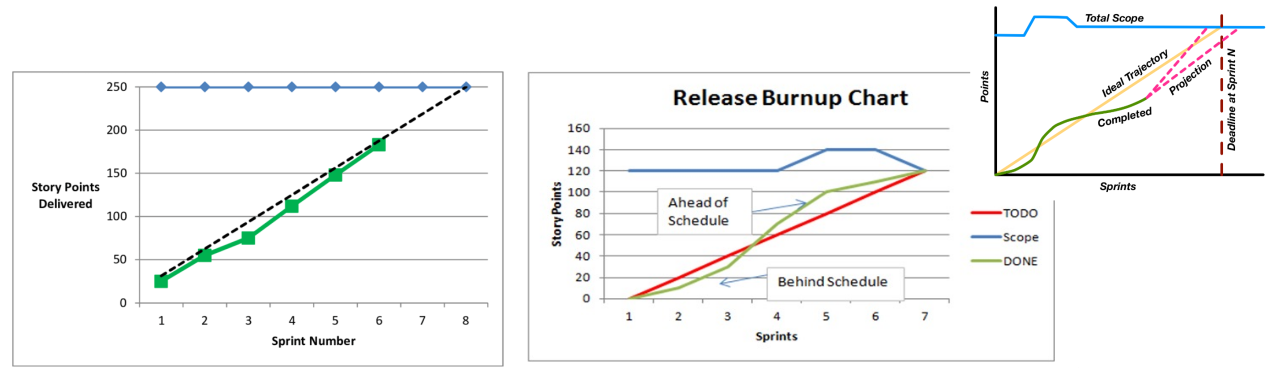
Velocity, Burndown & Burnup
- Velocity: how many story points the team delivered in a sprint
- prediction of time, cost and next sprint
- Capacity Planning: necessary size of the team (future)
- Burndown Chart: shows
- the amount of work that has been completed in an epic or sprint
- the total work remaining
- prediction of completion time & identification of scope creeps
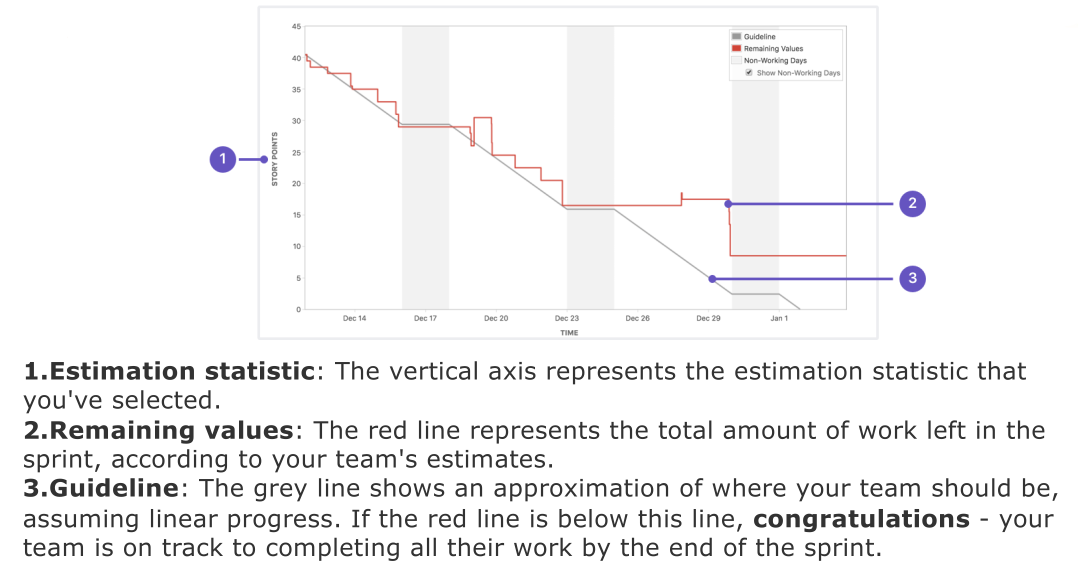
- Burnup Chart: total work planned vs. work completed to date